by Kathryn Grace Warren of Hill Lake Farm
Contrary to popular belief, Sourdough isn’t just a modern trend that became popular amongst bored housewives during covid. Sourdough truly is the original bread. Long before commercial yeast packets and chemically conditioned flours existed, bread was leavened using wild, native yeasts and beneficial bacteria. This natural fermentation not only gave bread its rise, but fundamentally transformed the grain itself—enhancing flavor, structure, and digestibility in ways modern shortcuts simply cannot replicate.

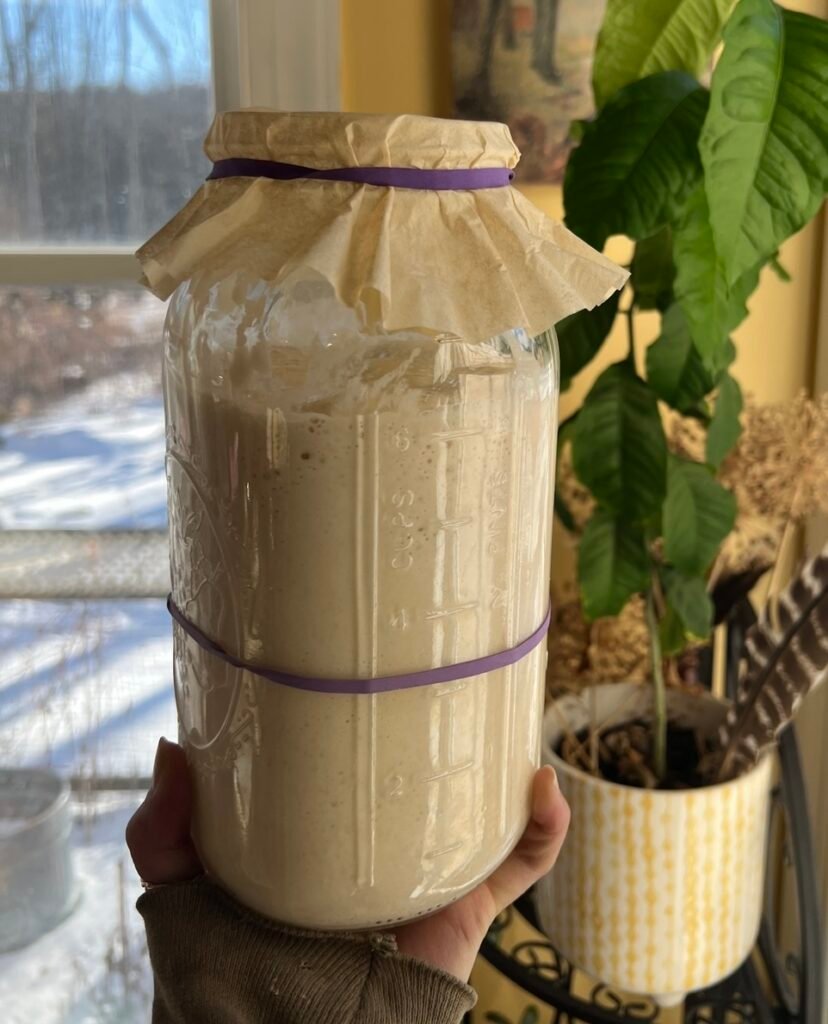
These microbial cultures were a direct connection to our food, and the life that surrounds us; like a tether connecting us back to our environment and reminding us that we can not live or thrive without these connections. You do not make the oxygen that fills your lungs or the food that fills your belly. We are all products of our living environment, innately and inextricably linked.
In the past, these connections were safeguarded by women—mothers and grandmothers—who carried the wisdom of many generations before them. It wasn’t until the Industrial Revolution that bread making became a matter of efficiency and convenience, instead of one of love and nourishment.
As a culture, we devalued the unseen labor happening in the home because it resisted easy measurement and profit. The knowledge passed down through hands and memory was dismissed, while we began to worship at the altar of industrial efficiency. In our attempt to optimize, we tried to reinvent the wheel—and in doing so, we lost something essential.
Real sourdough bread stands in quiet opposition to this model. It is slow where industry is fast, relational where industry is extractive, and nourishing where industry prioritizes scale. In every sense, true sourdough is the antithesis of industrially produced bread.
Disclaimer: This content is for educational purposes only and is not intended as medical or nutritional advice. Individual responses to foods vary.
Benefits of Sourdough Fermentation:
1️⃣ Improved Mineral Availability
Sourdough fermentation reduces phytic acid, a natural compound in grains that binds minerals like:
- Iron
- Calcium
- Magnesium
- Iron
2️⃣ Better Digestibility
The long fermentation process:
- Begins breaking down starches
- Partially degrades proteins, including gluten
- Produces organic acids that change dough structure
Many people find sourdough easier to digest than conventionally leavened bread.
3️⃣ Lower & Slower Carbohydrate Breakdown
Sourdough fermentation alters starch structure and produces acids that:
- Slow starch digestion
- Reduce rapid glucose release compared to fast-risen bread
This leads to a more gradual energy release rather than a sharp spike.
4️⃣ Natural Preservation
The organic acids produced during fermentation:
- Inhibit mold growth
- Extend shelf life naturally
- Reduce the need for preservatives
This is why traditional sourdough keeps longer without additives.
5️⃣ Flavor & Complexity
Wild fermentation creates:
- Lactic acid (mild, yogurt-like tang)
- Acetic acid (sharper notes)
- Aromatic compounds
The result is depth of flavor that can’t be achieved with commercial yeast alone.
6️⃣ Texture & Structure
Sourdough fermentation improves:
- Dough elasticity
- Crumb structure
- Moisture retention
This produces bread that is both chewy and tender, with better keeping quality.
7️⃣ Traditional, Low-Intervention Process
Sourdough relies on:
- Wild yeast
- Lactic acid bacteria
- Time
No commercial yeast, dough conditioners, or chemical accelerators — just fermentation doing the work.
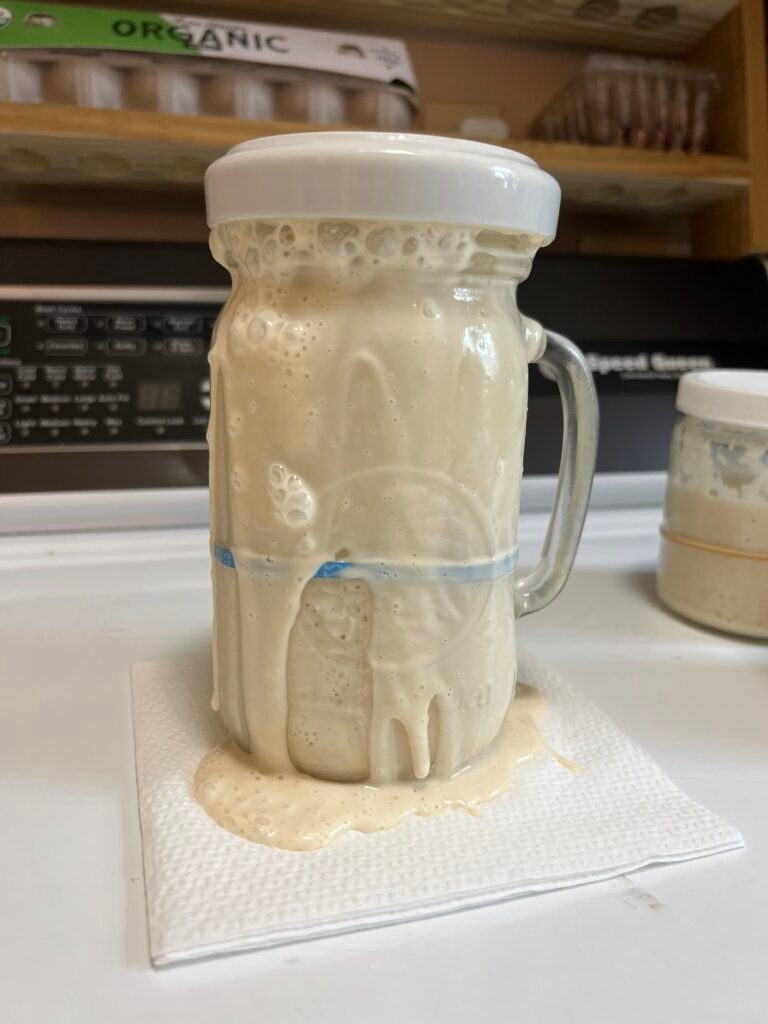
SOURDOUGH V. INDUSTRIAL BREAD
Good sourdough bread begins with good flour—and that alone sets it apart from industrially produced bread. A sourdough starter is alive; its ability to ferment, strengthen dough, and create rise is directly tied to the health and diversity of its microbial community. Flour isn’t just an ingredient in this process—it’s the food source for those microbes.
Industrially produced bread is typically made with highly refined flour treated with additives designed to increase shelf life, speed production, and standardize results. Many of these substances are unnecessary for traditional breadmaking and can be disruptive both to microbial fermentation and to human health. Common additives found in industrial bread flours include:
- Bleaching agents (such as benzoyl peroxide or chlorine dioxide)
- Potassium bromate (a dough strengthener banned in EU, UK, & Canada)
- Azodicarbonamide (ADA) (used to condition dough and speed production)
- Synthetic enrichment inorganic iron (often poorly absorbed compared to naturally occurring iron)
- Added folic acid (synthetic, not naturally occurring folate)
- Preservatives like calcium propionate
- Residual herbicides from conventionally grown wheat
Industrial bread jumps through hoops trying to achieve the same nutrition and texture, that real bread, made with good flour, has naturally. We got so caught up in worshiping efficiency and short-term profit, that we missed the forest for the trees.
In the growing process, we prioritized faster growth and higher yields. Synthetic fertilizers and herbicides became the norm, often at the expense of soil health and nutrient density. In many conventional systems, wheat is also treated with glyphosate, sometimes applied shortly before harvest as a desiccant to accelerate drying. This practice can significantly increase exposure to the herbicide.
Glyphosate works by inhibiting the shikimate pathway, a biochemical route plants use to synthesize essential amino acids. Humans do not possess this pathway—but the microbes that inhabit our gut do, as do the plants that fill our plates, or the bellies of the animals we eat. Once again, we see that we cannot separate ourselves from our environment, and it’s foolish to attempt to severe the very connections that sustain us.
The industrial milling process continues this pattern. Wheat is stripped down, refined, and chemically treated to the point that it must later be “enriched” to replace what was lost. In the industrial bread-making process, we neglect real fermentation, and favor industrial yeast that can rise bread in significantly less time, but with significantly less nutrition.
Traditional sourdough fermentation includes a complex bacterial culture that produces organic acids, partially predigests the grain, and unlocks minerals and vitamins that would otherwise remain bound. The long fermentation time required for sourdough isn’t just about flavor or texture—it’s about making the nutrients in grains meaningfully more bioavailable.
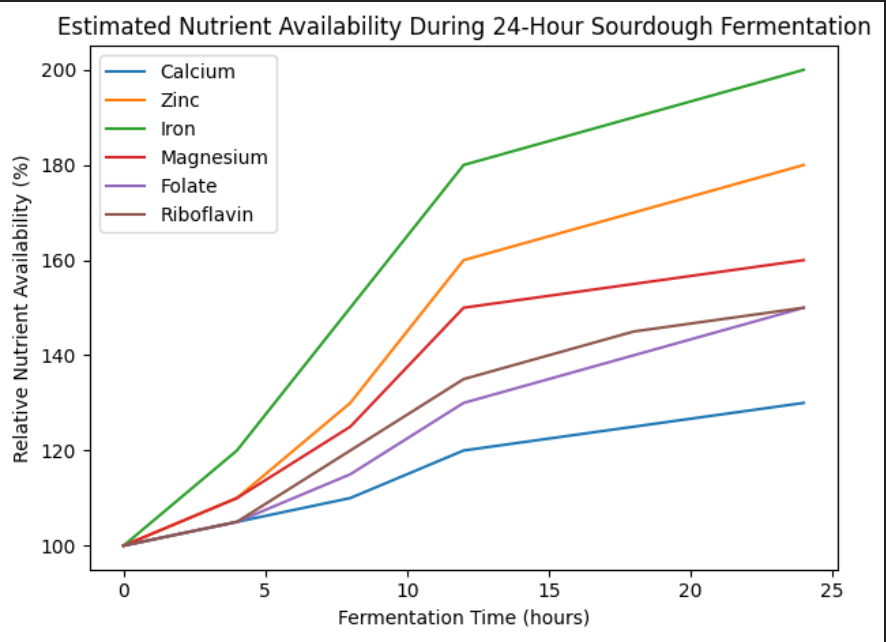
The graph above shows the relative increases in specific nutrients over the fermentation window, and illustrates why long fermentation matters. Sourdough fermentation transforms flour by breaking down the phytic acid (found in nearly all grains), which binds to nutrients, limiting their absorption. The lactic and acetic acid bacteria in sourdough produce acids which degrade phytic acid and unlock nutrients such as: Calcium, Iron, Magnesium, Zinc, Folate, Riboflavin, and even more.
My Favorite Flour Brands:
While fermentation can substantially increase nutrient absorption, the quality of the flour before fermentation will really determine total nutrition. The gold standard of flour is going to be flour that is produced in healthy soil, unadulterated with chemicals, milled using traditional methods, and produced as locally as possible. While its beautiful to imagine a world where this flour is easily accessible to everyone, we’re not quite there yet. Here are my favorite flour brands which invest in organic & regenerative practices, and build toward that better future:
Jovial Regenerative Einkorn: Ancient grain wheat grown in organic soil in Italy.
King Arthur Bread Flour: organic, untreated, & high performance bread flour grown in 100% in the USA.
Wild Hive Farm Flour: LOCAL flour grown & milled in NYS.
Disclaimer: Some links on this site are Amazon affiliate links. If you make a purchase, we may earn a small commission at no extra cost to you. We only recommend products we trust. Your support helps keep Hill Lake Farm growing and allows us to keep sharing recipes, tips, and stories with you.
Who Could Benefit Most From Sourdough?
Gluten sensitive individuals →
Fermentation physically breaks down the gluten proteins so they do not trigger the immune system in the same way, leading to little to negative gut reactions.
Pre-Diabetic →
Long fermentation lowers the bread’s glycemic impact by increasing the acidicity, leading to a slower rise in blood sugar compared to conventional, fast-leavened breads.
MTHFR Gene Variation →
Fermentation can make naturally occurring folate in grains significantly more bioavailable.
Autism Spectrum →
Increases the over digestibility, improves texture & increases in B-vitamins.
Everyone →
Increased overall nutrient content, & limits exposures to harmful chemicals like bleach, bromate, pesticides, & synthetic vitamins.
DISCLAIMER: This content is for educational purposes only and is not intended as medical or nutritional advice. Individual responses to foods vary.
Want to Start Your Own Sourdough Journey?
The microbes are waiting for you…